
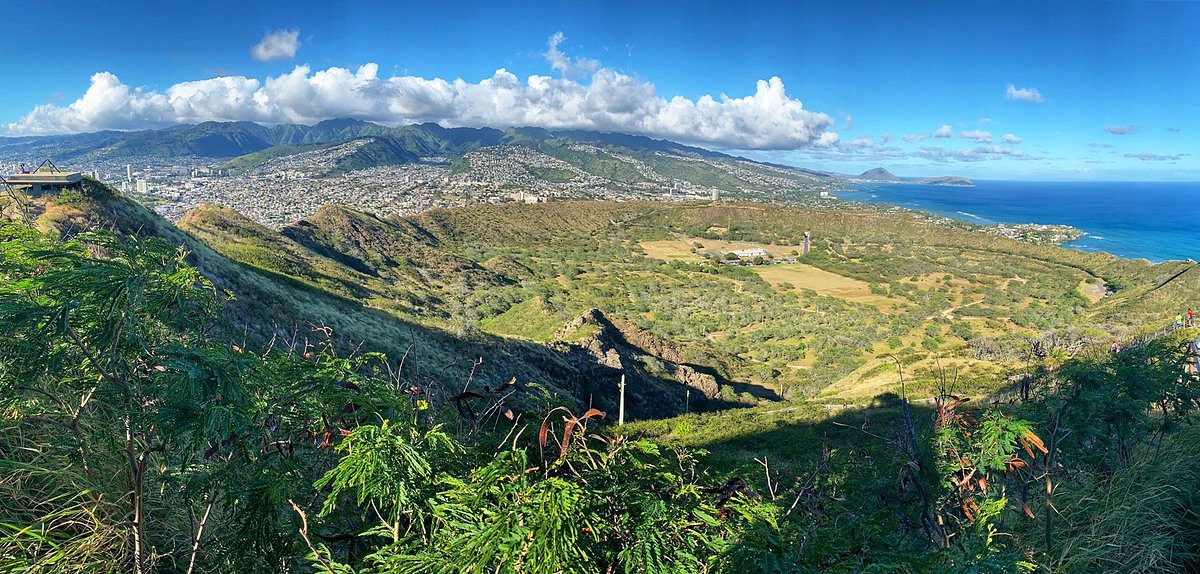
Diamond Head State Monument is Oʻahu’s most recognizable landmark — a 300,000-year-old volcanic tuff crater whose summit trail delivers the island’s best panoramic views of Waikiki, Honolulu, and the Pacific. If you are visiting from out of state, you must book an entry reservation online (plus parking if you are driving) up to 30 days ahead — walk-ins without reservations are turned away.
Key Highlights
- Non-residents need advance reservations for both entry ($5 per person) and parking ($10 per vehicle); Hawaii residents enter free with state ID.
- The Diamond Head Summit Trail is a 1.6-mile round trip, gaining about 560 feet, and most hikers finish in 1.5 to 2 hours.
- The route passes through a 225-foot lighted tunnel, two steep staircases, and a 1911 fire control station on the way to the 760-foot summit.
- Gates open at 6:00 am and lock at 6:00 pm daily (last hike reservation 4:00 pm, last entry 4:30 pm); the monument is closed Christmas and New Year’s Day.
- Sunrise visits are popular — but book an early slot, since gates don’t open until 6:00 am, and everyone must be out before sunset.
Why Diamond Head Is Oʻahu’s Signature Hike
Known in Hawaiian as Lēʻahi (“brow of the tuna,” for the crater’s silhouette seen from the sea), Diamond Head is the postcard image of Hawaiʻi. Its English name came from 19th-century British sailors who mistook the calcite crystals glittering on its slopes for diamonds. The landmark sits prominently near the eastern edge of Waikīkī’s coastline, just minutes from the resort district, which is why it has become the first hike most visitors tackle — and the one nearly everyone photographs.
The monument covers more than 475 acres, including the interior and outer slopes of the crater. With over 3,000 visitors a day, the Hawaiʻi Division of State Parks calls it one of the most heavily visited destinations in the state, and a reservation system introduced in May 2022 keeps the crowds manageable.
Reservations, Tickets, and Fees
This is the single most important thing to know before you go: non-residents cannot enter without a reservation. There are no tickets sold at the gate. Book online through the Hawaiʻi State Parks reservation system (Go State Parks Hawaii) up to 30 days in advance.
- Entry: $5 per non-resident; children 3 and under free; Hawaiʻi residents free with a valid Hawaiʻi ID or driver’s license. Credit card only.
- Parking: $10 per non-commercial vehicle for non-residents; free for residents with ID. Your reservation is tied to a 2-hour time block — parking guests must arrive within the first 30 minutes of their slot.
- Walk-ins and drop-offs: If you arrive without a vehicle (rideshare, taxi, or on foot), you still need an entry-only reservation. Tour and trolley passengers also need reservations, which registered tour operators can arrange on your behalf.
Morning slots, especially the early ones, sell out quickly during school breaks and holidays, so set a reminder for 30 days before your hike date.
The Hike: What the Trail Is Really Like
The Diamond Head Summit Trail is 0.8 mile from the crater-floor trailhead to the summit — 1.6 miles round trip — and gains about 560 feet of elevation. It was built in 1908 as part of Oʻahu’s coastal defense system, and hiking it is a walk through both geology and military history.
The first section: switchbacks and tuff. The trail starts on a concrete walkway that soon gives way to a natural tuff surface about 0.2 mile up, winding through a series of switchbacks along the crater’s steep interior slope. The surface is uneven in places, so sturdy footing matters more than speed.
The middle section: tunnel and stairs. The real workout begins with two steep staircases totaling more than 170 steps, followed by the dramatic 225-foot lighted tunnel bored through the crater wall. The final tenth of a mile is all stairs and especially steep — take it one flight at a time, and use the handrails where provided.
The top: fire control station and summit. You emerge into the Fire Control Station, completed in 1911, which once directed artillery fire from batteries in Waikīkī and Fort Ruger. From there, a narrow spiral staircase and the last push bring you onto the summit ridge at 760 feet, where old bunkers and pillboxes sit beside the huge navigational lighthouse built in 1917.
Allow 1.5 to 2 hours for the round trip, including time to linger at the top. The trail is not ADA accessible and is very steep and uneven in sections. No pets are allowed except service animals.
What You’ll See From the Summit
The payoff is one of the great views in all of Hawaiʻi. From the summit ridge you get a sweeping postcard panorama from Koko Head to Waiʻanae: the Waikīkī shoreline and its high-rises on one side, the turquoise Pacific on the other, and the lush crater interior spread out below. On clear winter days, you may even spot humpback whales passing offshore. Bring your camera — but also take a few minutes to just stand there. After the climb, the breeze at the top feels like a reward.
Best Time to Visit Diamond Head
Go early. Gates open at 6:00 am, and the first reservation slots of the day offer cooler temperatures, softer light, and thinner crowds. By midday, the trail is exposed with almost no shade, and the dark tuff radiates heat. Note two quirks of the schedule: because the gates open at 6:00 am, catching the actual moment of sunrise from the summit isn’t possible for much of the year, and since all visitors must be out by 6:00 pm when the gates lock, sunset hikes from the summit aren’t an option either. For a genuine sunrise experience on Oʻahu, plan a different outing — but an early-morning Diamond Head hike is still the best time slot of the day.
What to Bring and Safety Tips
The state parks division keeps the advice simple, and it’s worth following: wear good walking shoes, bring water, and wear a hat and sunscreen. A few practical additions from frequent visitors:
- Water and sun protection are non-negotiable. There is little to no shade on the trail, and you’ll be climbing in the sun. A hat, sunglasses, and reef-safe sunscreen are standard gear.
- Wear real shoes. Sneakers or light hiking shoes with grip beat flip-flops — the tuff surface and stairs are unforgiving on smooth soles.
- Pace yourself. The trail is short but steep. Rest at the viewpoints, and don’t feel rushed.
- Check conditions. Reservations aren’t refunded for rain, and the trail can be slippery when wet.
- Skip it if mobility is a concern. The last stretch is extremely steep stairs; this is not the hike for anyone with knee, balance, or heart issues.
Getting There
Diamond Head State Monument sits at the east end of Waikīkī, an easy 10-minute drive, rideshare, or ~40-minute walk from central Waikīkī hotels. TheBus also serves the crater. Entry to the trailhead is through a 225-foot tunnel at the crater entrance, where parking reservations are checked. If you’re staying in Waikīkī, consider pairing the hike with the other top things to do in Waikiki — the beach, the zoo, and the aquarium are all nearby.
Geology and History of the Crater
Diamond Head is a broad, saucer-shaped tuff cone formed about 300,000 years ago during a single, explosive eruption. Ash and fine particles blasted into the air settled and cemented into a rock called tuff — the layered walls you see from the trail. Most of the vegetation and many of the birds in the crater today were introduced in the late 1800s to early 1900s, though you may still spot native species along the way.
The crater’s modern history is military. After the trail was built in 1908 for coastal defense, Diamond Head became a strategic lookout and fire control post. The observation station, bunkers, and pillboxes you pass are genuine remnants of that era. The Diamond Head Lighthouse on the outer slopes was originally established in 1899 and the current 57-foot tower dates to 1917; it still guides ships into Honolulu Harbor.
After Your Hike: Nearby Waikīkī Attractions
Once you’re back at the crater floor, the day is still young. The best things to do on Oahu easily include a Diamond Head morning combined with the afternoon elsewhere. Top pairings:
- Waikīkī Beach and Kalākaua Avenue — minutes away for a swim and lunch after the climb.
- Diamond Head sailing and turtle snorkeling tour — see the crater from the water instead of from the top, with sea turtles along the way.
- Hanauma Bay snorkeling — another reservation-required Oʻahu classic, just east along the coast.
- Honolulu’s highlights — from ʻIolani Palace to the Bishop Museum, the city’s history pairs naturally with the crater’s military story.
Frequently Asked Questions
Do I need a reservation to hike Diamond Head?
Yes — if you are a non-resident. Entry and parking reservations are required for out-of-state visitors and must be booked online up to 30 days in advance; there are no tickets sold at the gate and visitors without reservations are turned away. Hawaiʻi residents with a valid state ID or driver’s license do not need reservations and enter free.
How much does it cost to visit Diamond Head State Monument?
Entry is $5 per non-resident (children 3 and under free), and parking is $10 per non-commercial vehicle for non-residents — credit card only. Hawaiʻi residents enter and park free with valid ID.
How long is the Diamond Head hike and how hard is it?
The Summit Trail is 0.8 mile each way (1.6 miles round trip), gaining about 560 feet of elevation. It’s rated moderate to strenuous — steep switchbacks, more than 170 steps across two staircases, a 225-foot tunnel, and a steep final stair section. Plan on 1.5 to 2 hours round trip.
What are the opening hours of Diamond Head State Monument?
Normal operating hours are 6:00 am to 6:00 pm daily. The last reservation to hike is 4:00 pm with last entry at 4:30 pm, gates lock at 6:00 pm, and all visitors must be out by then. The monument is closed on Christmas and New Year’s Day.
Can I watch sunrise or sunset from the summit?
Not exactly as you might hope. Gates open at 6:00 am, so in much of the year the sun is already up by the time you reach the summit — and everyone must leave by 6:00 pm when the gates lock, so sunset viewing from the top isn’t possible. Early-morning slots still give you the coolest temperatures and the best light of the day.
Is Diamond Head suitable for kids or seniors?
It depends on fitness, not age. Active children and fit older adults hike it regularly, but the steep stairs, uneven tuff surface, and lack of shade make it unsuitable for anyone with knee, heart, or balance issues. The trail is not ADA accessible, and only service animals are allowed.